category

0
total
0
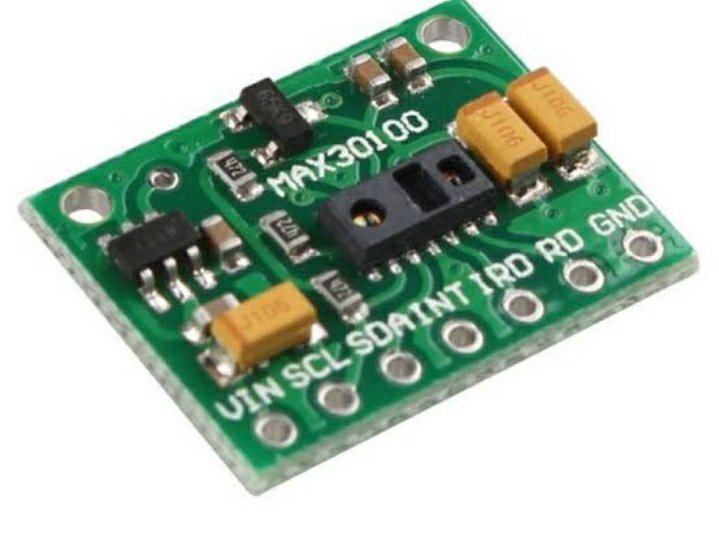
MAX30100: A Comprehensive Overview
The MAX30100 is an advanced, integrated sensor module designed to accurately measure pulse rate and blood oxygen saturation (SpO2) levels. This module leverages advanced photoplethysmography (PPG) technology, making it an essential component for any health monitoring device. Due to its compact size and low-power consumption, the MAX30100 is widely used in portable health monitoring systems and wearable technology.
Key Features
- Integrated Sensor: Combines a photodetector and two LEDs (red and infrared) in a single package.
- High Sensitivity: Capable of detecting very small changes in blood volume.
- Low Power Consumption: Minimizes battery usage, ideal for portable devices.
- High Sample Rate: Supports sampling rates of up to 100 Hz, providing real-time data.
- I2C Communication: Easily integrates with microcontrollers and other electronic systems via the I2C interface.
Applications
- Fitness and Health Monitoring Wearables: Ideal for smartwatches and fitness trackers.
- Medical Devices: Used in non-invasive medical monitoring equipment.
- Smart Home Devices: Can be integrated into smart health management systems.
- Telemedicine: Useful for remote patient monitoring solutions.
Energy Consumption
One of the key advantages of the MAX30100 is its low power consumption. It operates on a voltage range of 1.8V to 3.3V, making it compatible with various battery technologies. The module can be powered in a sleep mode, significantly conserving energy when not in use. This feature is critical for wearable applications where battery life is a primary concern.
How to Use
To integrate the MAX30100 into your project, follow these steps:
- Wiring: Connect the sensor to your microcontroller using the I2C protocol.
- Power Supply: Ensure that the power supply is within the specified voltage range.
- Library Installation: Utilize existing libraries (such as from Adafruit or SparkFun) to simplify the coding process.
- Data Reading: Implement code to read the pulse and SpO2 values from the module.
- Data Processing: Use algorithms to process and display the data to the user.
For detailed technical specifications, please refer to the MAX30100 Datasheet.
related products

NFC Card 13.56MHz – NTAG215 Chip (White PVC)

Proximity RFID Card 125 KHz Printable
MAX30100 Pulse Oximeter Heart Rate Sensor Module

Voltage and Current Sensor ( MAX471 )


Color Sensor with 4 LEDs ( TCS3200 )

Popular Brand