category

0
total
0
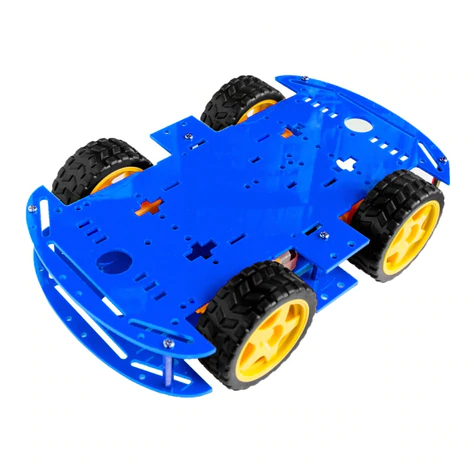
4 WD Robot
The 4 WD Robot is an innovative robotic platform designed for a variety of applications, providing a robust and reliable solution for both educational and industrial purposes. This platform is equipped with four-wheel drive (4 WD) capabilities, enabling it to traverse a wide array of terrains. Its modular design allows for easy customization and expansion, making it an ideal choice for hobbyists, educators, and researchers alike.
Key Features
- Robust Construction: Made from durable materials to withstand rugged environments.
- Four-Wheel Drive: Enhanced traction and stability on various surfaces, including grass, gravel, and mud.
- Modular Design: Easily attach additional sensors, cameras, and other components.
- Enhanced Control: Compatible with various microcontrollers and programming environments, including Arduino, Raspberry Pi, and more.
- Real-time Feedback: Equipped with sensors for obstacle detection and navigation.
Applications
The 4 WD Robot can be utilized in numerous fields such as education, research, and industrial automation. It is perfect for:
- Robotics Education: A great tool for teaching programming and robotics in classrooms.
- Research Projects: Use in universities and research institutions for experimentation and development.
- Outdoor Exploration: Ideal for autonomous outdoor navigation and tasks.
- Automated Transport: Can be adapted for logistics and material transportation in warehouses.
Energy
The 4 WD Robot is designed to be energy efficient while delivering high performance. It typically operates on rechargeable lithium-ion batteries, providing a balance between power and sustainability. Users can expect:
- Long Run Times: Capable of operating for extended periods on a single charge.
- Efficient Power Management: Smart circuitry that ensures optimal battery usage and durability.
How to Use
Using the 4 WD Robot is straightforward:
- Assemble the robot according to the provided instructions.
- Install the necessary software and drivers compatible with your control board.
- Connect the power supply and configure the settings through your selected programming environment.
- Upload your code and begin operating the robot remotely, utilizing real-time data from the onboard sensors.
related products
4-wheel robot platform with motors and wheels

acrylic smart robot chassis

3d printer graber i3 wooden frame
Popular Brand